 The last time I posted about beekeeping, I wrote about making a split and watching the bees rear a new queen for a new colony. That queen, Queen Hippolyta I laid a ton of eggs all summer. Her bees seemed to be slightly meaner than Queen Leslie Knope II’s bees, but the colony was strong. I could hardly ever find Queen Hippolyta (named for Wonder Woman’s mother, by the way) in the hive, so I decided to try to mark her. Thus began a chapter of Queen Hippolyta I’s reign that has been, frankly, kind of unbelievable.
Queen Marking
On August 17th, I went out for a check of my two hives and brought out the queen marking kit complete with yellow pen for 2022 (queen marking color code) just in case I found Queen Hippolyta. Surprisingly, I did.
To mark a queen with the kit I have, I was supposed to catch the queen in a clear queen clip, transfer her to a marking tube, shut the lid, gently push her against the screen, then mark her with a paint pen. I was able to get her in the queen clip. That step alone was fairly nerve-wracking because I was afraid that I would decapitate her or injure her in some other way.
I tried to transfer her into the marking tube and she flew away. I caught her again, off of my arm, and tried to transfer her into the marking tube and she flew away before I could shut the lid. I tried and failed again. This time, I couldn’t find her anywhere and was afraid I was going to step on her. I started cleaning up, trying to move my feet as little as possible and looking at the ground carefully before each step. Then, I saw a cluster of bees on the wrapper from a mite treatment over by my other hive. There was the queen! Foolishly, I tried one more time. She flew away again. I feared I had really lost her, but I hoped for the best. (Video here.)
A New Queen
On August 22nd, I did a hive inspection and saw sealed queen cups. I had lost their queen and they were raising Queen Hippolyta II. On August 31st, I saw that the virgin queens had hatched. I waited a week to check for eggs and saw none. There had been some rainy days and it is getting later in the summer, so I decided to wait a bit longer to check for eggs, but I started to doubt that Queen Hippolyta II would successfully mate and start laying eggs.
 Hippolyta Returns
On September 14th, I prepared to combine my two hives if there were still no eggs in The Bee & Bee. Over in my second hive, The Parks Dpt., Queen Leslie Knope II’s colony had few resources and the population did not seem very strong. In The Bee & Bee, they had backfilled the comb and had a mite treatment during the brood break (The Parks Dpt. was also treated), so they were a good candidate for combination with a weaker hive if they were still queenless. They had resources but needed a queen.
My hive inspection revealed that The Bee & Bee was not queenright, so I proceeded with the newspaper combine. There was one big problem. When I bought my equipment last year, I accidentally bought two different sizes of hive. To combine the hives, I had to move the frames from The Parks Department (a 10-frame) into smaller 8-frame boxes so that they could be stacked on top of The Bee & Bee. It was a bit of a chaotic scene, but I was able to get them combined, remove empty frames for storage, and give them the Apivar-tainted honey that my bees made last year to get them through dearth and started for winter.
While I was moving frames around, I looked very seriously for Queen Leslie Knope II. It was essential to make sure she was in the right box. I saw eggs, so I knew a queen was in there laying. Her brood pattern even looked better than it had in a while. I couldn’t find her, though, and it made me nervous. Before I closed up the combined hive, I checked once more on the frames from The Parks Dpt. and all of a sudden there was an unmarked queen on one of the frames. She looked just like I remembered Queen Hippolyta I looking. What in the what!?
I closed up, stunned, and went inside to look at some pictures from previous hive inspections. I am pretty certain that this queen is actually Hippolyta I. I really wish I could ask the bees some questions, but it seems like what must have happened is that when she flew off, annoyed, she went to The Parks Dpt, who had been playing with replacing Queen Leslie II all summer, and they accepted her, the stronger queen, and dispatched Queen Leslie Knope II, God rest her. I last saw Queen Leslie II on August 4th, but at no point did The Parks Dpt. have a brood break that would have indicated queenlessness. Queen Hippolyta II must have either been killed in a battle royale when she hatched, died during a mating flight, or had some other end. Now, Queen Hippolyta, I was back to rule The Bee & Bee. I never could have predicted this turn of events. (See video of the combination here.)
 Queen Marked
On September 19th, I went to check on the combined Bee & Bee with my friend Allison, who was visiting from out of town. The goal, aside from showing her the bees, was to see if the bees had completed the newspaper combine by removing the newspaper between hive boxes, and then to put the boxes back in the correct order if they had.
Everything was going fine, the bees had accepted each other, and then a medium honey super fell off my little side table. Bees were ejected from the box but overall did not seem as angry as I expected them to be after that happened. As I assessed the damage, having sent Allison across the yard in case the bees wanted to sting in retaliation, I saw a small cluster of bees behind me on the board I stand on during inspections. My heart dropped.
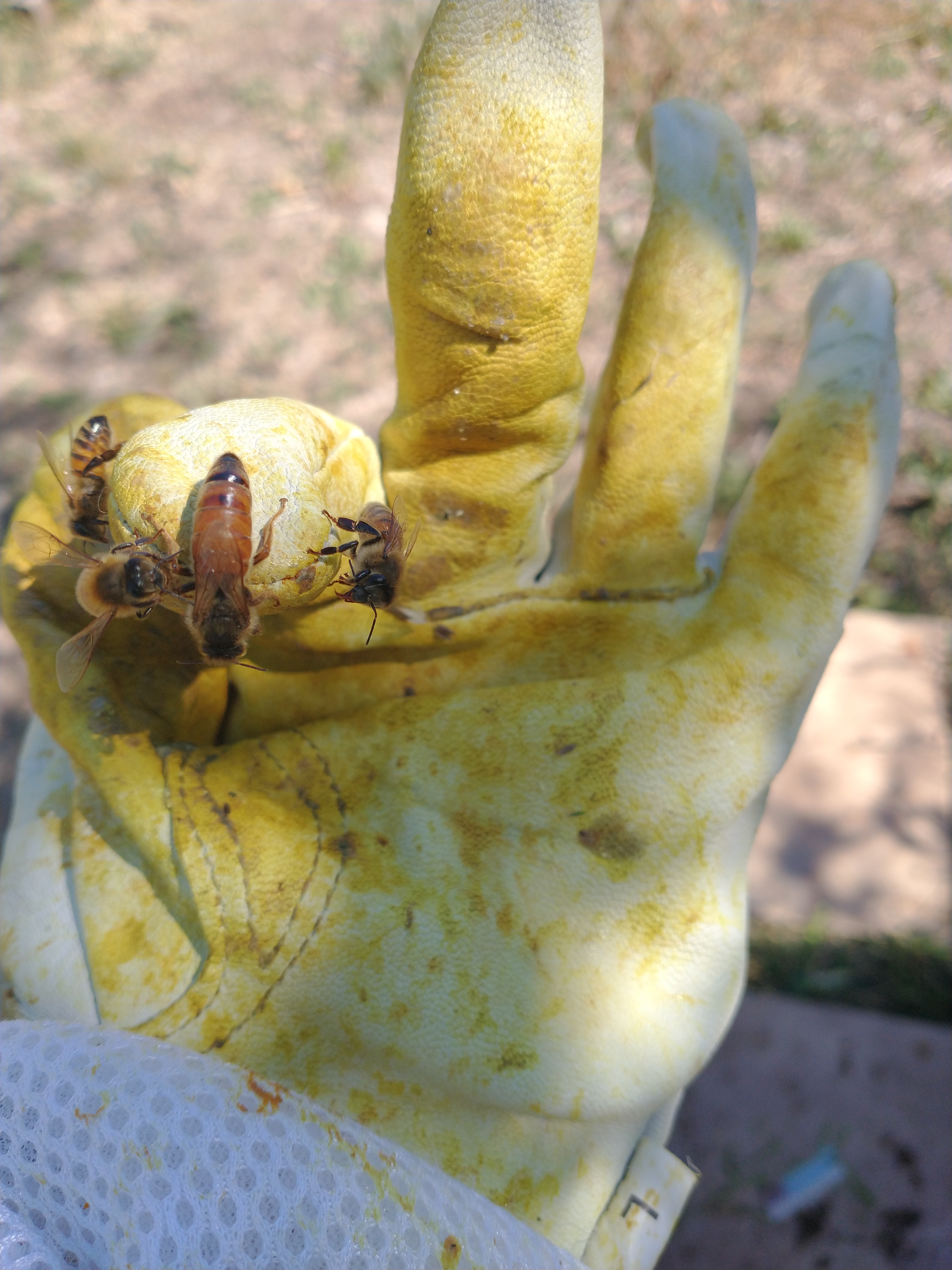
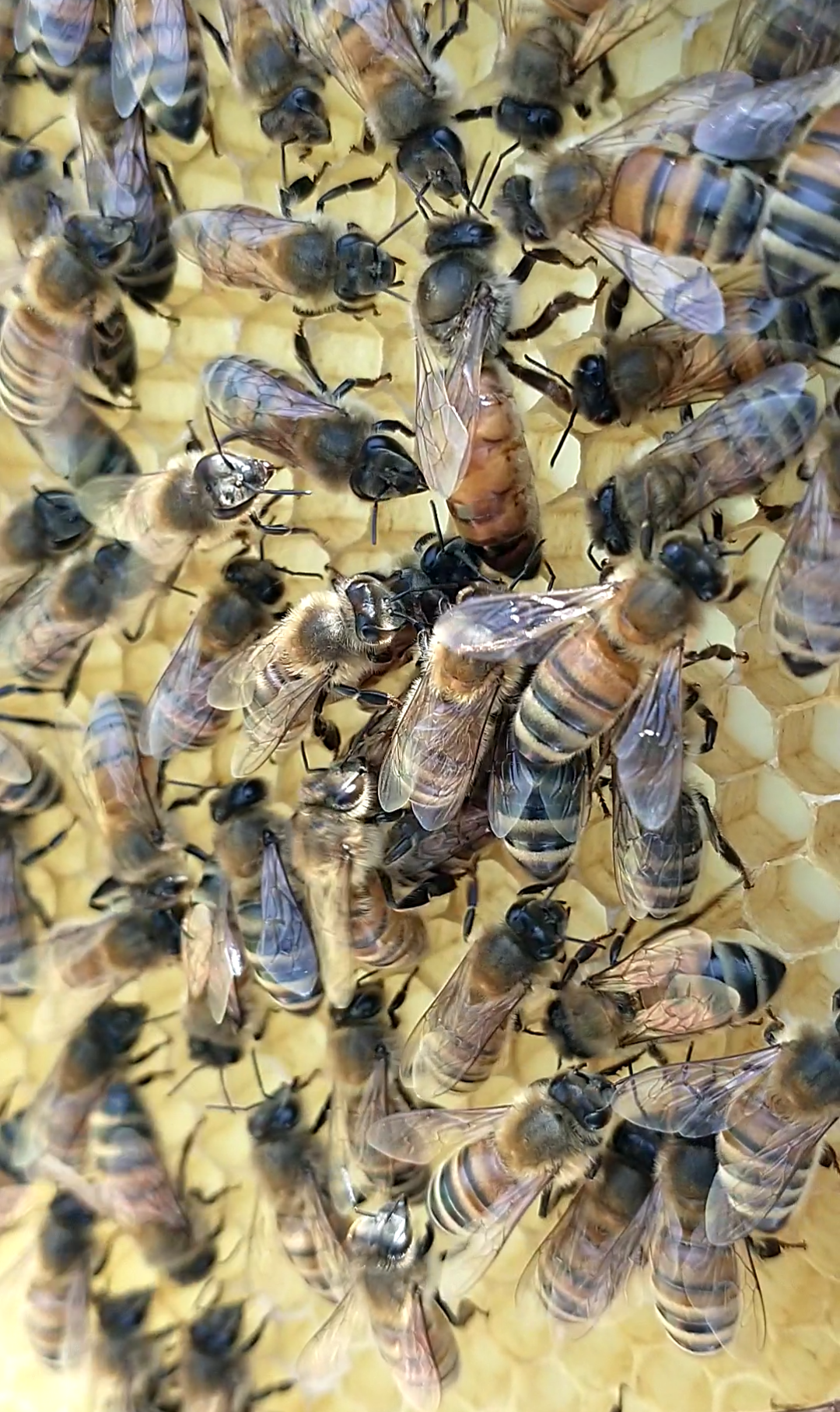
As I thought, the queen was on the ground with attendants around her. I could see that she was breathing, though. I held my own breath as I gently scooped her up. She did not appear to be injured in any way. Just stunned, maybe? I observed her and the bees around her. They were loving on her and she got to her feet and moved around. I could see that her legs and wings were uninjured. She looked perfect, but she wouldn’t get off my glove. It was so strange. For the longest time, she just groomed herself and walked around. (Video here)
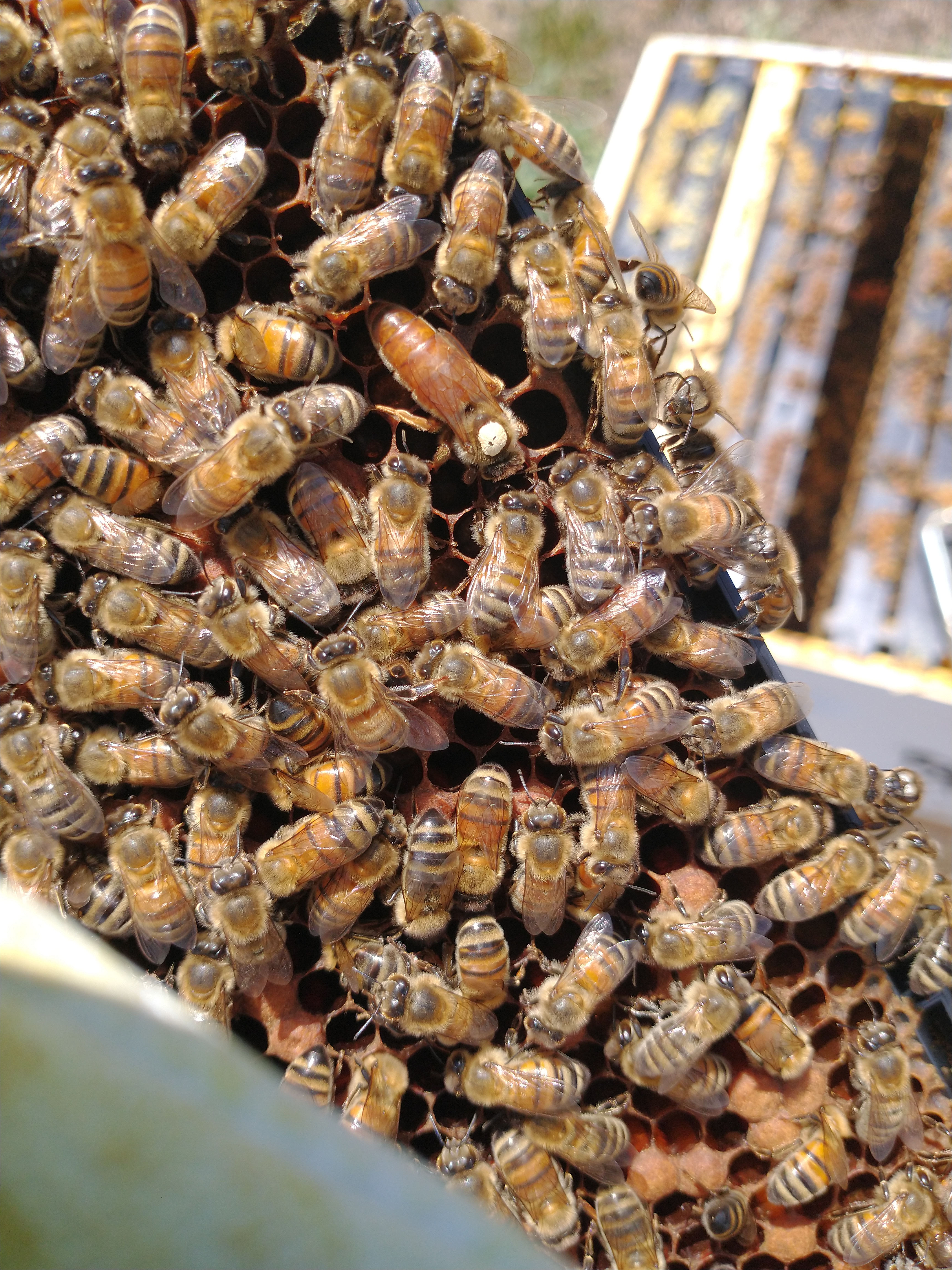
The bees were calm, so I called Allison back over to see the queen. I had her find my yellow paint pen in my toolbox and get it primed. It had dried out pretty well from the heat in the last month, but I gave myself one shot to gingerly mark this queen while she stood on my glove. I did it! I couldn’t believe it. Because the pen was dry, it’s not the neatest marking, and I won’t be surprised if the bees groom it right off her (they started immediately), but I got her marked, just over a month after this whole twisted story started.
It took the longest time for Queen Hippolyta to go back into the hive. I had to transfer her from my glove to my hive tool and kind of tap her off of that onto a frame. She went in though. I’ll be keeping my fingers crossed that the next time I check she is still laying a strong brood pattern and yesterday was just a strange episode in her life. Long live the queen.
Rest in Peace, Queen Leslie Knope II. I really was fond of you, but with her amazing survival skills, Queen Hippolyta I has risen in my estimation.

 One way to prevent your bees from swarming is performing a split, which is essentially an artificial swarm. When I last posted about beekeeping I was on the fence about if/when to split my hive, but decided to do it after a nudge from our friend Rachele (thanks!). I would have liked to keep
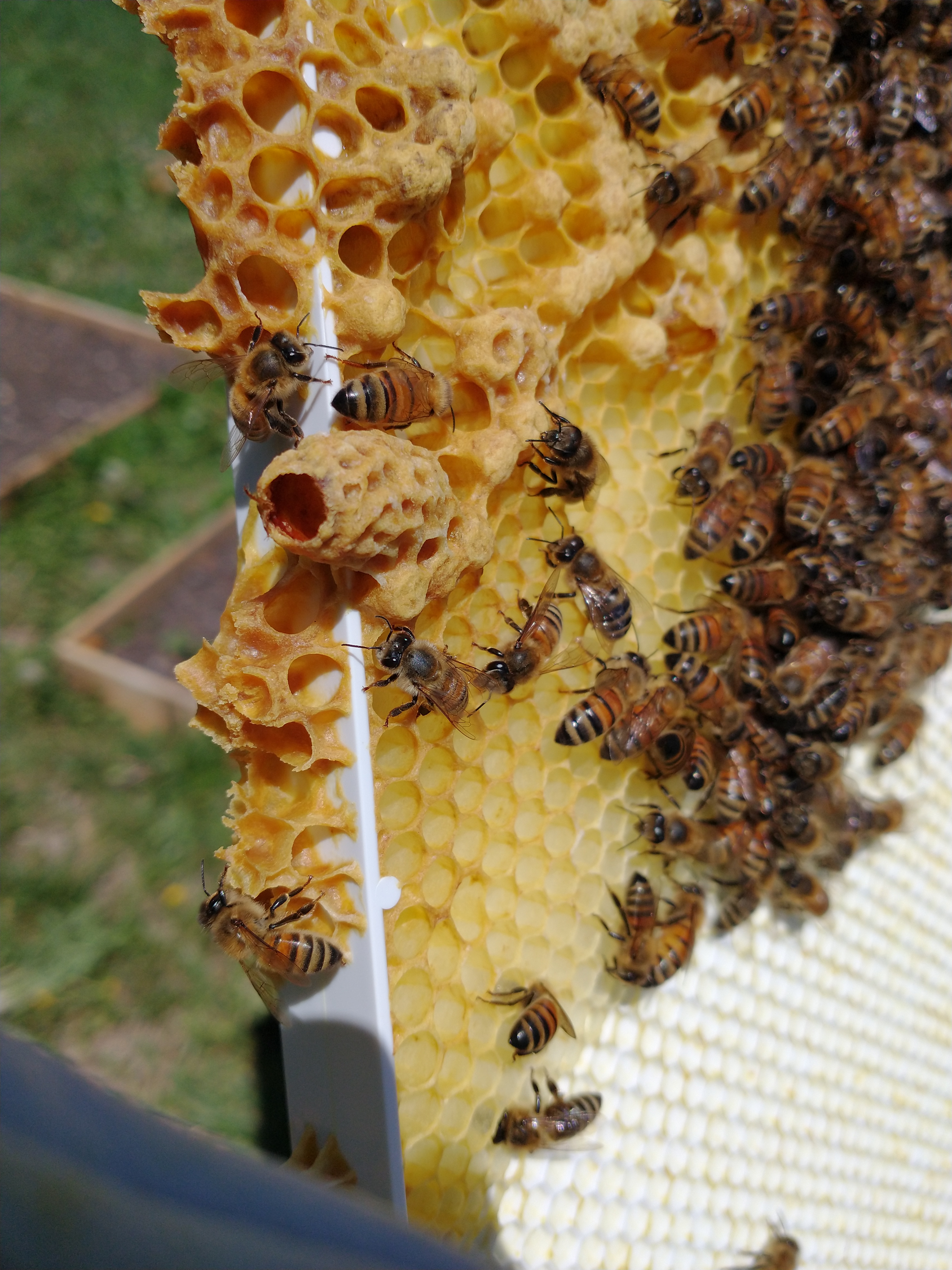


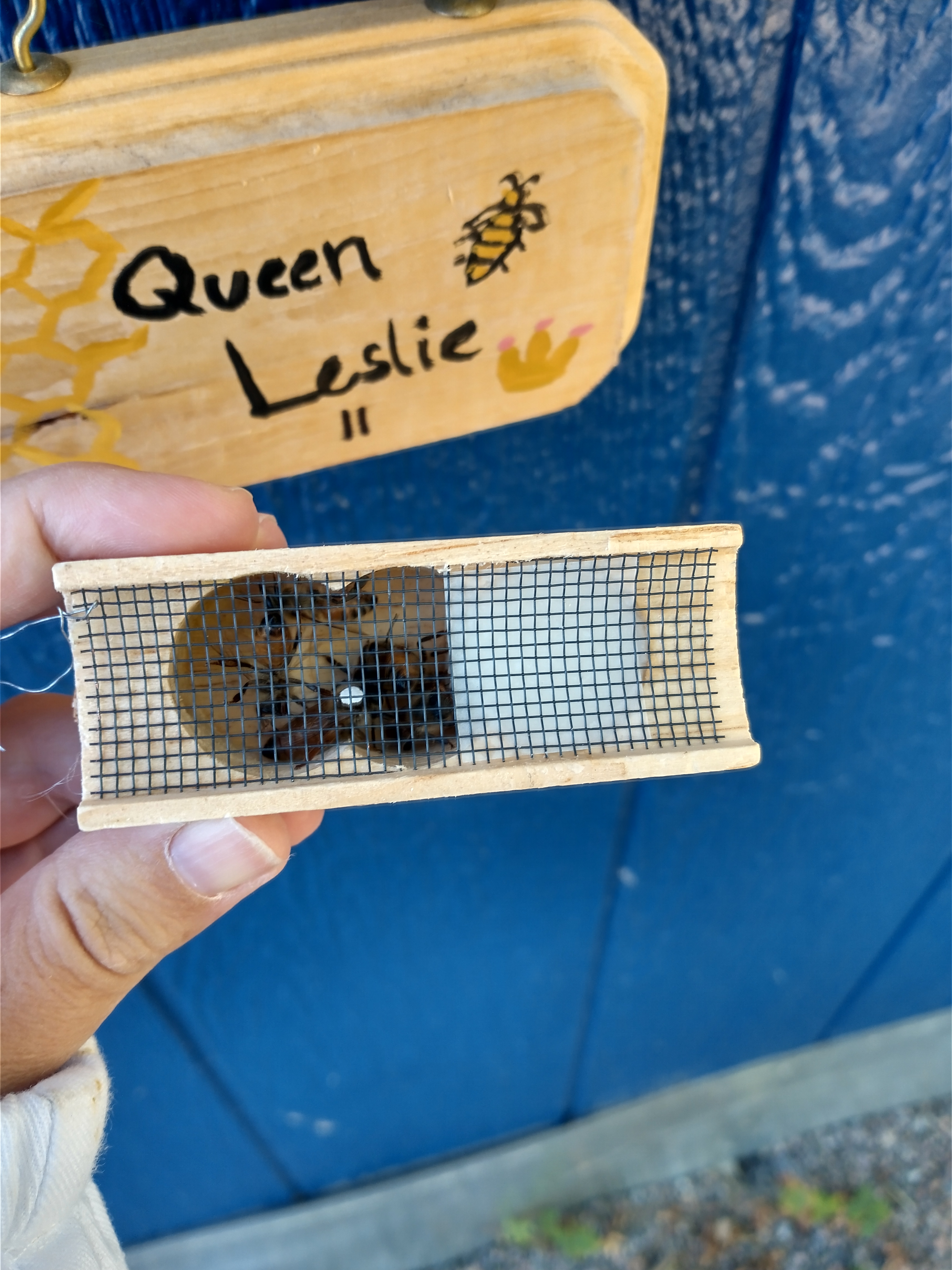 I mentioned briefly in an earlier post that my beehive lost its queen after a Formic Pro treatment. I had suspected for a few weeks prior that the queen was getting weak, but as it’s my first year, I wasn’t sure if she was slowing down because it was summer dearth or if it was a problem. The hive had made moves to replace her before, and I thwarted them. Because she was unmarked, I did not know how old she was. Looking back, I should have either requeened the hive earlier in the summer or let them requeen themselves. When I removed the Formic strips and did a hive inspection in the last week of September, I found many supersedure cells. I stopped counting at 12. That late in the season, however, it was too late for them to raise a new queen and get her mated. Thanks to the advice of a couple of other local beekeepers on Instagram (Thank you!), I moved quickly to find a new mated queen. I couldn’t find one locally anymore, so I was able to get one shipped from California. Thankfully, she arrived safely.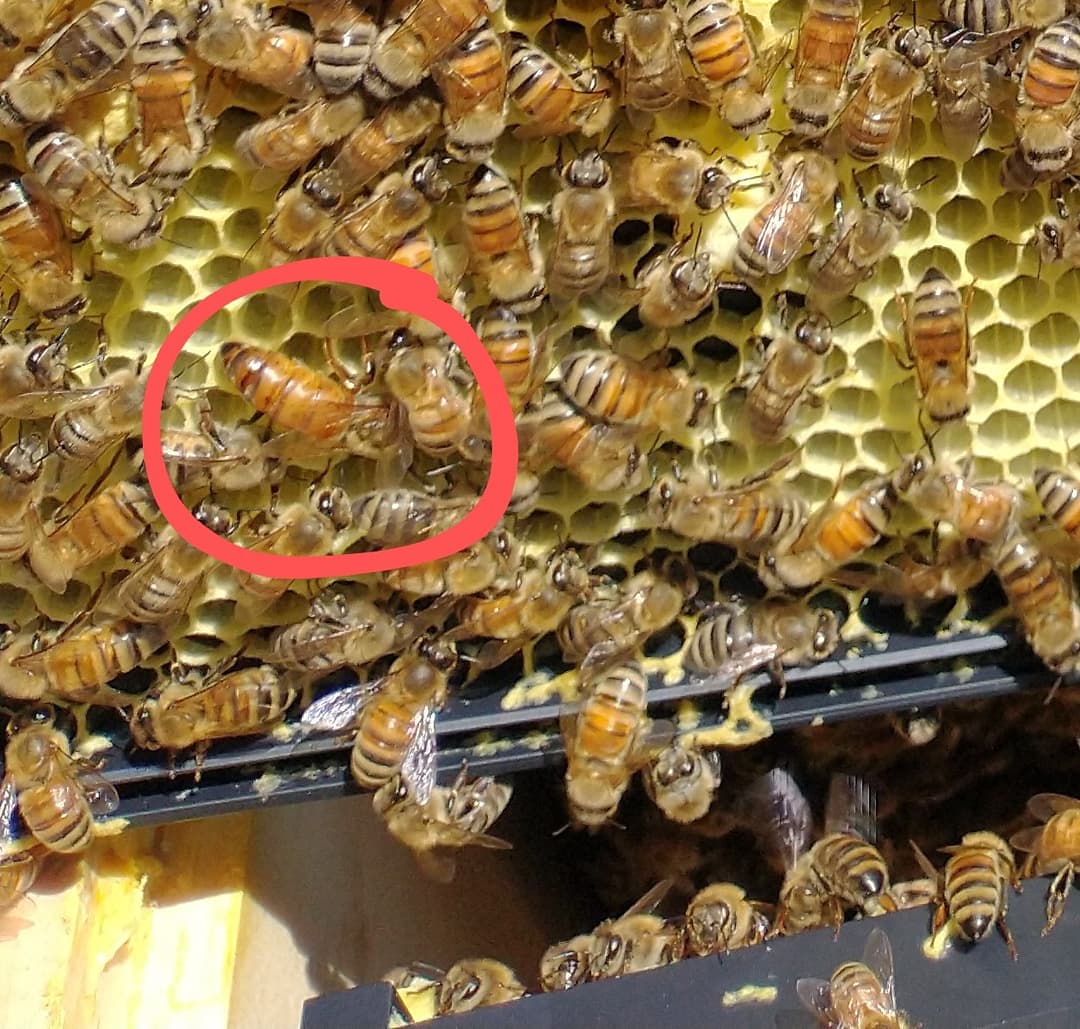

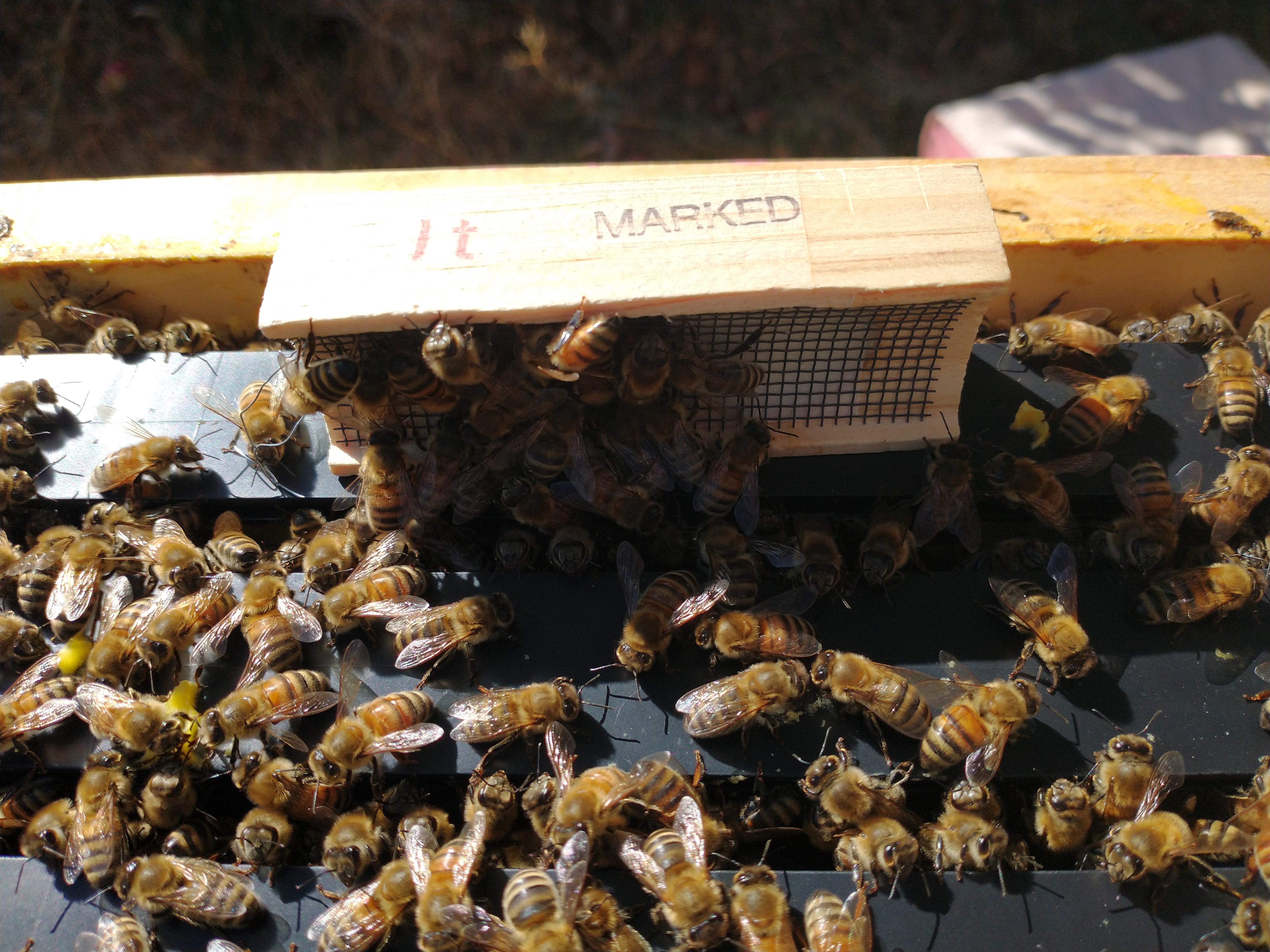 By the time Queen Leslie II arrived, I was as confident as I could be that Queen Leslie I was no longer in the hive. Even still, I spent some time observing the bees’ attitude toward their new queen before I left her in the hive. When you order a new queen, she comes in a little cage with a few attendant bees who are there to care for her. One end of the cage has fondant for the bees to eat and the other has a candy plug that the bees will gradually eat through to release her into the hive. This slow-release mechanism allows the queen’s pheromones to circulate through the hive before she is loose, helping the hive to accept her as their queen, and not immediately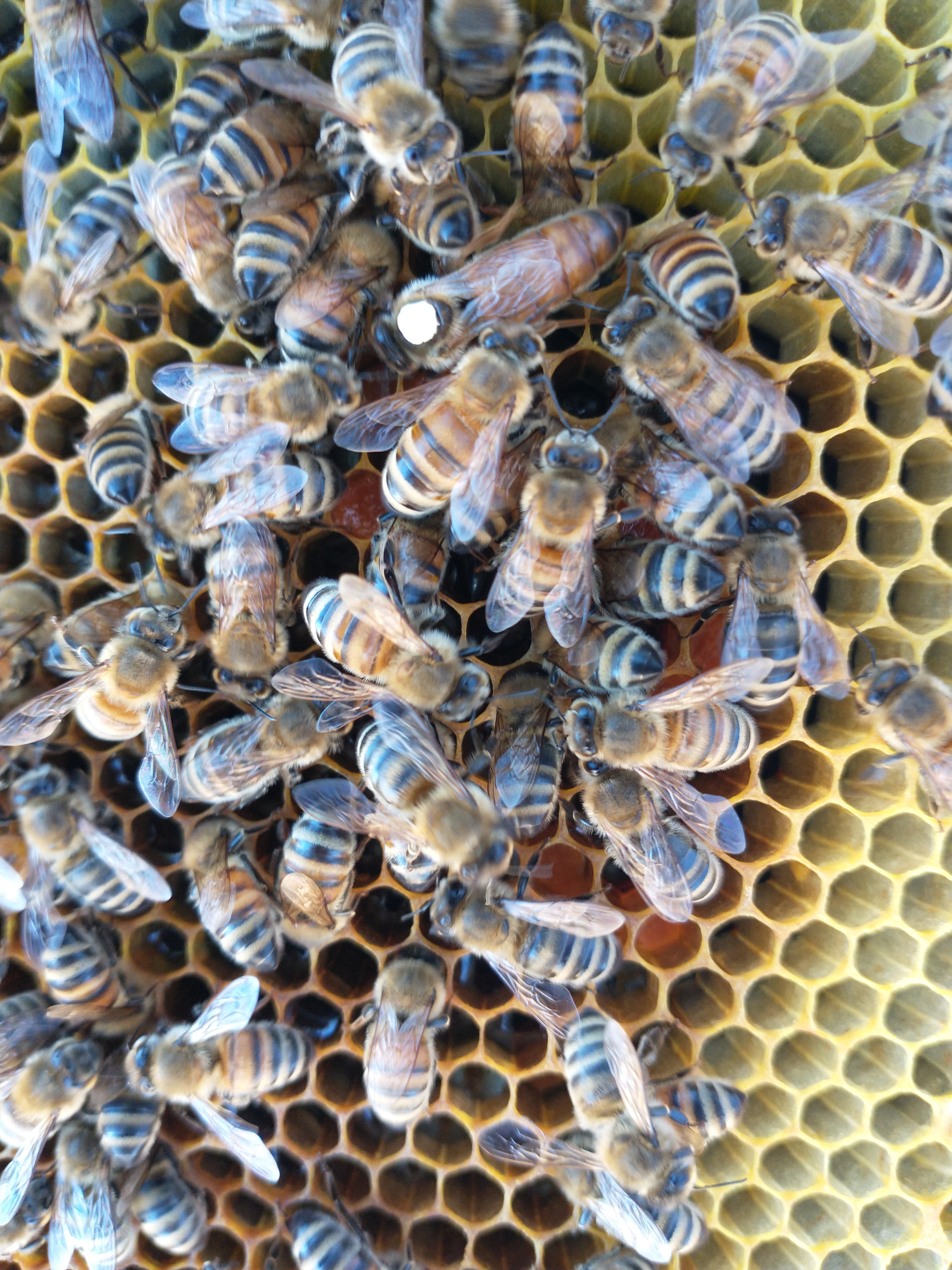
 It is not unusual for hives to try to replace a new queen. During that first hive inspection after installing her majesty, I again found supersedure cells. I cut them out, and scolded my workers a bit. During the first weekend of November, I was doing a hive inspection on an unseasonable 70-degree day, and found a swarm cell—with a larva in it—on the bottom of one frame. That there was only one, and that it was there so late in the season was confusing, and frustrating to me. Before I could even decide what to do, I accidentally smashed it while moving the box it was in. My latest, and last, hive inspection showed no signs of them trying to replace Queen Leslie II, who is still laying like a champ. I expect that as the temperature drops, she will slow down. In the meantime, it has been an absolute treat to have a marked queen. I can always find the queen now and I am delighted every time I see her.
  Sol Homestead LLC